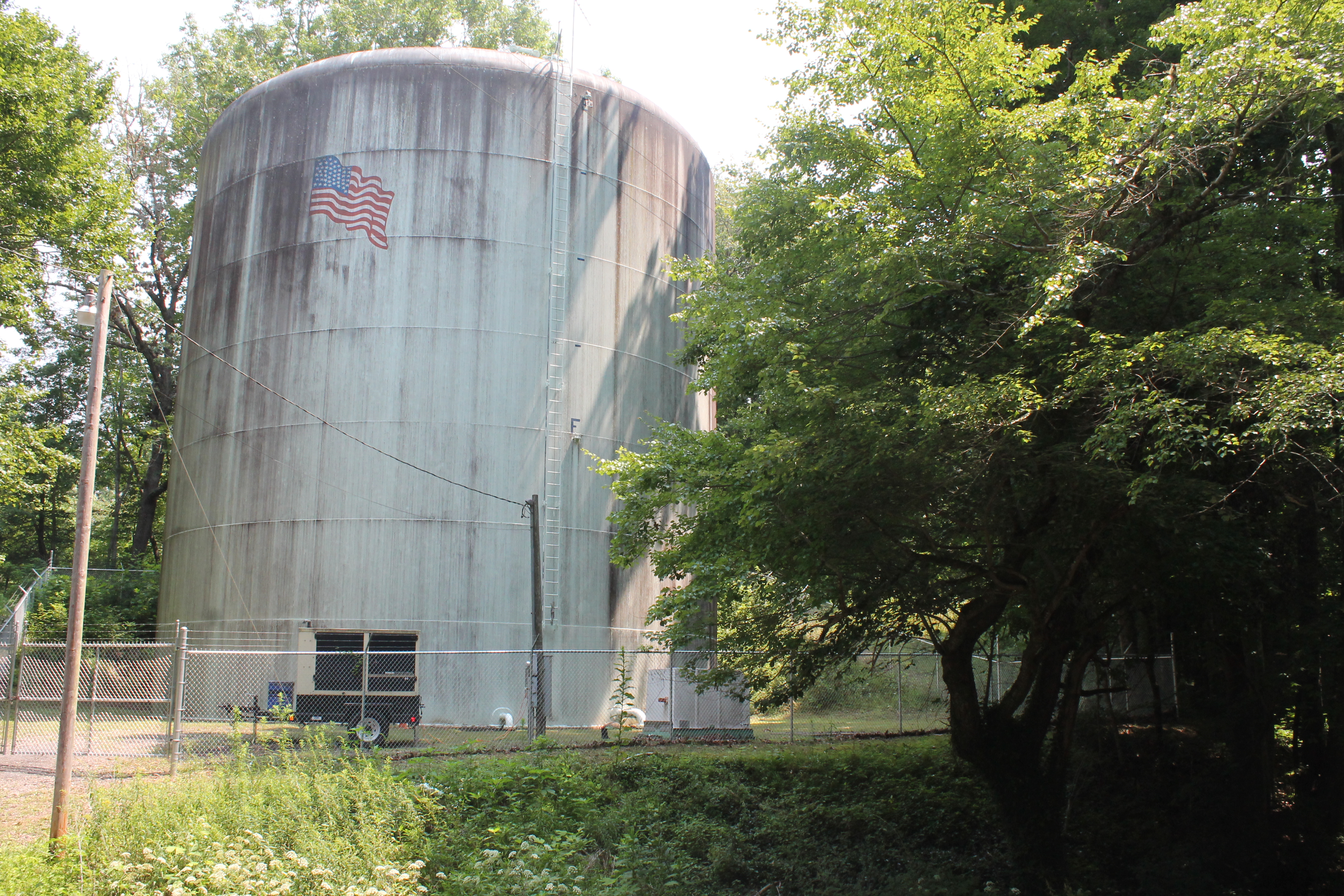
The Sherill Gap town water tank is 1 million gallons, providing a good metric for the magnitude of the town’s current losses. The system lost the equivalence of nine water tanks in just 32 days
Jessica Webb
editor@thesmokymountaintimes.com
How much water loss is too much? Bryson City is a little too close for comfort when it comes to that question. In just June alone, the town’s Deep Creek water plant produced over 9 million gallons more than it was able to bill for on the month. Dealing with a loss in the amount of water produced by the plant versus what it’s billing for is not a new issue, but plant director Russell Ball told town board losses this great are unsustainable.
Worst case scenario would be the state stepping in and requiring Bryson City build a second plant, likely a conventional one on the Tuckaseigee River. The Deep Creek plant currently operates at between 70-80%, and the state can demand additional water sources be developed at 80%, he said.
“I am sad to say, but can tell you for sure, if something does not change dramatically and soon, we will surpass 100,000,000 gallons of unaccounted for water this year (2021), exceeding the 2009 amount by a good margin,” Ball wrote in an email to the town manager.
Last Monday, he spoke to the Bryson City Town Board of Aldermen about the issue. The good news is, he has identified a potential solution: metering all the fire lines for commercial, industrial and institutional properties.
With a graph in hand, Ball drew the board’s attention to 2002 to 2007, where the annual loss went up substantially- representing about 43%. The data indicates that there was in increase in the number of commercial customers yet a decrease in collections.
“How can we have more commercial customers and half as much billed?” asked alderwoman Janine Crisp.
“Exactly my point,” Ball said.
After years of detective work in the form of hunting for leaks on the ground, Ball has a theory that the culprit won’t be discovered that way.
“I think the problem really began between 2002 and 2007, and it’s in our commercial and industrial users,” he said. “Whether it’s intentional or leaks on the customer’s side of those fire lines, we can hunt for them until the end of time and never find it. The only way we are going to get this under control is to put meters for every use even if it’s not for metered.”
Nearing on 10 years ago, the town board approved new meters for all the lines and diligently searched out all the leaks under the town’s jurisdiction. At that time, he said, the town got its water loss down to about 25%.
“It leads me to believe what is left is this unaccounted for going through these fire lines and improperly metered ones,” he said.
The town was back up to 91 million gallons of unbilled water last year. “At the current rate, 2021 is going to blow that away,” Ball warned.
Town board already approved metering five fire lines in last year’s budget, with that work ongoing.
Lynn Thomas, clerk to the board, estimated there are about 10 or 15 fire lines that just get a fee opposed to being metered. Now, all new businesses are required for those lines to be metered.
Mayor pro-tem Ben King pondered if the cost of metering is worth the expense, to which Ball said, absolutely.
“It’s 11,890.32 a day every month, we’re losing well more than what it cost to properly replace these fire lines,” Ball said.
As an example, he said, the town installed with a fire flow rated meter for one of the big fire lines, in this case one used by the National Park Service in Deep Creek, and it paid for itself in 60 days—that’s how much water they were using, Ball said.
The expense to the town isn’t just in the water loss and the pressure on the plant, it’s also the cost in staffing associated with production. Ball said even if the plant was fully staffed with four operators- it now has two- the department would still hit overtime on a regular basis.
“Right now, we’re working over double to keep producing that water that’s going to who-knows-where,” he said. “I don’t believe the majority of this is leaks; if it is, it’s on the other side on their property on fire lines.”
If water losses were at 15% and not 45%, Ball explained in his report, it would equate to 5 ½ hours less finished water pump run time on average a day. When it comes to just two people working at the plant and putting in the extra time, that equates to a big cost in salary expenses.
“The only way we are going to get this under control is to put meters for every use, even if it’s not for metered,” he said.
The board said they trusted Ball, and requested he put a prioritized list together of the businesses where fire lines need to be metered to try to attack the huge water loss.
Mayor Tom Sutton said he’s hopeful the town will also discover some of the issues with the asset inventory study on the water lines, with funding for that project having been approved.
Island Park
In actions July 19, the board approved the $13,236 purchase of a Can-Am Defender utility vehicle for maintenance to use on Island Park and throughout downtown. In discussion, King said he has been pondering ways to make the park more appealing to increase usership.
“Island Street will look great with the lights that are almost completed,” King said. “With Island Park, we’re seeing a lot of destruction already, and we haven’t even done anything. I want us to try to come up with ideas on what can we do to improve that.”
He added, “The only thing that would decrease a lot of the unruly activity is to have it be a more populous spot.”
Police Chief Charlie Robinson said the department has been patrolling the island at least once a shift and did have one suspect they banned from the property after he continued to move rocks and logs after being asked not to.
They hypothesized that clearing more of the underbrush on the island and adding lighting if possible, would help.
In other actions, the board approved CDBG equal housing opportunity and CDBG fair housing complaint procedures as required by the grant.
The next town meeting is scheduled for Monday, Aug. 2 at 6 p.m. at Town Hall.