
Chief pushes for funding
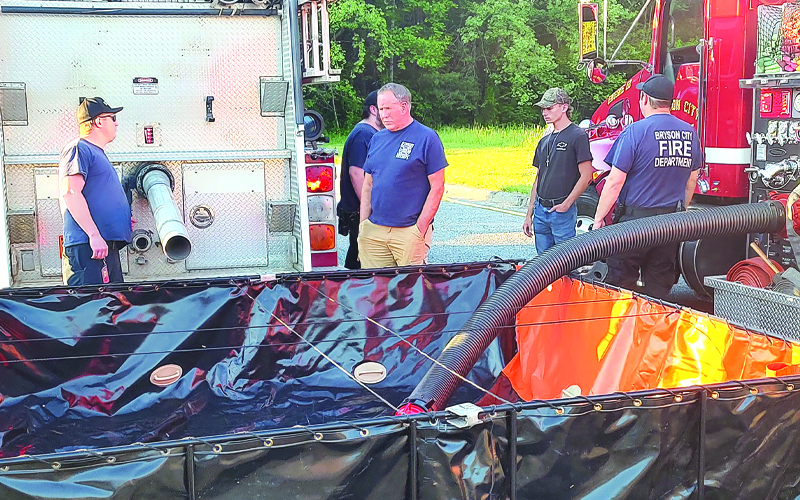
The chief of the Bryson City Fire Department is urging county commissioners to consider adopting a fire service fee, arguing it would provide stable funding, improve staffing and expand fire protection across Swain County.
Fire Chief Charles Bryson said the proposed fee would be assessed on property owners to help cover the cost of providing fire protection services.
Under North Carolina law, such fees are typically billed through property tax statements or other local billing systems and are often based on property characteristics such as square footage or acreage rather than market value.
“Fire departments are the only emergency service that puts money back in taxpayers’ pockets,” Bryson said, noting that insurance companies consider factors such as proximity to a fire department, access to hydrants and a community’s Insurance Services Office (ISO) rating when setting homeowners’ insurance premiums.
Bryson said the proposed fee would amount to about 5 to 6 cents per $100 of property value. For a home with a tax value of $200,000 a 5 cent per $100 value fire tax rate would cost a homeowner approximately $100 annually for fire service.
He said improved fire protection could reduce insurance premiums enough to save homeowners roughly $700 per year, factoring in the department’s new Office of State Fire Marshal Public Protection Classification Class 4 rating. Under the new rating, residents living within five miles of the department will continue to see reduced insurance premiums of $800.
“If we had a 5-cent service fee on property value, Swain County could bring in $1.2 million in fire protection,” Bryson said. “That would give us the basis to run 24/7 and purchase the facility and equipment needed to expand services.”
According to the North Carolina Association of Fire Chiefs, Swain and Graham counties are the only two counties in Western North Carolina that have not adopted either a fire tax or a fire service fee.
Bryson said additional funding would allow the department to establish substations in underserved areas, including Brush Creek, U.S. 28 South and Fontana Lake Estates.
“It would give us the ability to put substations in a lot of these communities that don’t have fire protection,” he added. “We could change that easily if we had a fire service fee.”
Bryson also raised concerns about staffing limitations, stating that the department relies on volunteers outside of normal business hours. During the threat of a winter storm last weekend, Bryson said he could not guarantee adequate staffing levels.