
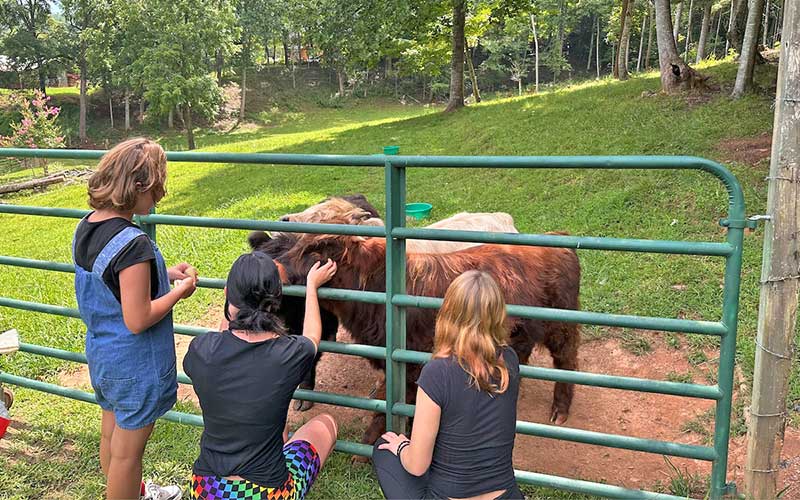
Hawthorn Heights WNC is doing far more than providing shelter for teenagers in crisis.
“We are more than a shelter — we are a stepping stone to a better future,” said Sarah Loafman, lead youth care worker at Hawthorn Heights.
The Bryson City nonprofit serves boys and girls ages 12 to 17 who are facing family instability, foster care placement, behavioral health struggles, school disruption and involvement with the juvenile justice system. The organization operates a nine-bed residential facility but receives an average of 270 referrals each year.
“Our mission is to provide safe housing that creates opportunities for at-risk youth,” Loafman said. “Safety and stability remain at the core of our work, but every day we help young people build the skills, confidence and support systems they need to thrive.”
Since reopening in 2020, Hawthorn Heights has become one of the few residential youth programs serving far Western North Carolina outside the Cherokee Children’s Home. Demand has surged in recent years, with Loafman saying annual referrals have doubled since the COVID-19 pandemic.
The organization serves youth facing a range of challenges, including family conflict, chronic truancy, substance use, homelessness and mental health struggles.
“Many of the youth we serve are navigating difficult circumstances that place them at risk of poorer long-term outcomes without intervention,” Loafman said. “Our program provides a structured, supportive environment where youth can develop healthy coping skills, improve decision-making and work toward personal goals.”
For rural counties like Swain, local access to youth crisis services can make a life-changing difference.
“Without local programs like Hawthorn Heights, many youth in crisis would be placed hours away from their homes, schools, families and support networks,” Loafman said. “For young people already facing significant challenges, being removed from their communities can create additional barriers to healing, stability and long-term success.”
At Hawthorn Heights, staff work to keep residents connected to their schools, extracurricular activities and family support systems whenever possible.
“Staying close to home provides young people with something that is often in short supply during a crisis: stability,” Loafman said.
Residents attend public school during the academic year before returning to the facility for therapy, homework support, life-skills training and structured programming focused on emotional regulation, substance use prevention and independent living.
“Equally important are the opportunities for youth to simply be kids,” Loafman said. “Those moments help youth build confidence, develop friendships and create lasting memories.”
The organization emphasizes individualized treatment plans and relationship-centered care. Each resident is paired with a case coordinator who serves as an advocate and mentor throughout their stay.
“We recognize that no two young people arrive with the same experiences, strengths, challenges or goals,” Loafman said. “Rather than relying on a standardized approach, we tailor services and supports to meet each youth where they are.”
Loafman said one of the biggest misconceptions about youth in crisis is that they are simply “bad kids.”
“In reality, most youth enter programs like Hawthorn Heights because they are facing difficult circumstances that are often beyond their control,” she said. “These are not troubled youth. They are children navigating circumstances that many adults would struggle to overcome.”
She said some of the most meaningful moments come when young people begin to trust the adults around them.
“The most rewarding part of serving youth in crisis is witnessing the moment when a young person finally feels safe enough to let their guard down,” Loafman said. “If you remain present, listen without judgment and continue showing up for them, those walls eventually begin to come down.”
The organization has also seen strong community support since reopening. Churches, businesses, civic groups and volunteers regularly contribute donations, organize celebrations and provide opportunities for residents.
One recent success story involved a pregnant resident preparing for independent living. Community members donated furniture, baby supplies and household essentials to help her transition into adulthood after graduating from high school and completing the program.
“The amount of love shown to this young woman by our community has been truly incredible,” Loafman said.
Loafman said Hawthorn Heights hopes to expand services in the future as demand continues to rise across the region.
“Our primary goal for the future of Hawthorn Heights is to expand our capacity and services so that we can support more youth and families across Western North Carolina,” she said.
For Loafman, the mission ultimately comes down to helping young people rediscover hope.
“We hope our community will continue to see these young people not for the challenges they have faced, but for the incredible possibilities that lie ahead of them,” she said. “When we invest in vulnerable youth, we are investing in the future of our community.”