
Beekeepers share knowledge, experience
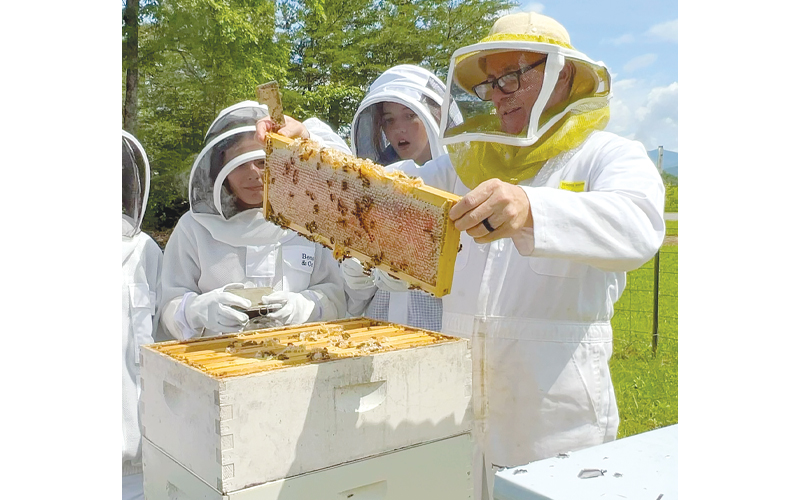
Beekeepers from across the Southern Smokies come together each month to share knowledge, support new beekeepers and promote healthier pollinator populations through the Smoky Mountain Beekeepers Association.
The group includes members from Swain County and surrounding counties and welcomes everyone from experienced beekeepers to gardeners and residents interested in helping pollinators.
“Beekeeping has always been a community effort,” said Fred Crawford, a local beekeeper who serves as secretary/treasurer and past president of the association. “Associations like ours help people learn from each other and keep bees successfully in our mountain environment.”
The organization meets monthly on the second Thursday from 7–8 p.m. at the Swain County Business Training Center. Meetings are open to the public and typically include a short educational program followed by discussion and questions.
“We want our meetings to be welcoming for anyone who’s curious about bees — whether they keep hives or just want to plant flowers that help pollinators,” Crawford said.
Programs often focus on seasonal hive management, honey production, bee health, pests and diseases, and pollinator habitat.
According to Crawford, members say one of the biggest advantages of the group is the opportunity to learn from beekeepers who understand the unique conditions of mountain beekeeping.
“Beekeeping in the mountains is different from other parts of the country,” he said. “Hearing from local beekeepers helps people manage their hives more successfully.”
This week’s meeting will feature a presentation on flowering plants that support pollinators.
Minda Daughtry, an extension agent with North Carolina Cooperative Extension serving Swain County and Jackson County, will present a program titled “Flowering Plants for Pollinators.” The presentation will focus on native plants that provide nectar and pollen for honeybees and other pollinators, along with bloom cycles and growing conditions that support them.
“Bees depend entirely on flowering plants,” Crawford said. “The more we understand our local bloom cycles, the better we can support both honeybees and native pollinators.”
Beekeeping season in Western North Carolina typically begins in late winter or early spring, often around February when the first trees start to bloom. That is when beekeepers begin checking hive health and preparing colonies for the busy spring buildup.
Getting started in beekeeping requires basic equipment such as a hive, protective clothing and tools like a hive tool and smoker. Many beginners start with one or two hives and learn through mentorship and local beekeeping groups.
Crawford said that one of the biggest challenges facing beekeepers today is the Varroa mite, a parasite that can weaken colonies and spread viruses among bees. Monitoring and managing mites is essential to maintaining healthy hives.
“Keeping bees is really about paying attention — to the weather, the flowers, and the health of the hive,” he said.
Despite the challenges, many beekeepers say the experience is deeply rewarding.
“A hive is one of the most fascinating things you’ll ever see — thousands of bees working together with a purpose,” said Crawford.
Many local beekeepers sell honey directly to customers through farm stands, farmers markets, roadside stands and local stores.
Crawford also keeps bees at Dogwood Farm in Whittier, where he and his wife produce honey along with eggs, blueberries and vegetables.
Beyond honey production, supporting pollinators benefits the entire region.
“Pollinators play a vital role in both agriculture and natural ecosystems,” said Crawford. “Planting native flowers, maintaining habitat, and supporting local beekeepers are all ways people can help.”
At the same time, he stressed the importance of never misusing pesticides.
“If pesticides must be used, they should always be applied according to the label directions,” he said, adding that the misuse of pesticides is one of the quickest ways to harm pollinators.
One thing is certain, there is a lot to learn about bees through the Smoky Mountain Beekeepers Association.
“Our meetings are a great place for people to learn more and get involved,” he said.