
Jessica Webb
editor@thesmokymountaintimes.com
We all know the saying it’s as easy as stealing candy from a baby, but it’s often older adults who are the target when it comes to fraud. There’s another phrase that is worth remembering when presented with possible scams, if it seems too good to be true, it probably is.
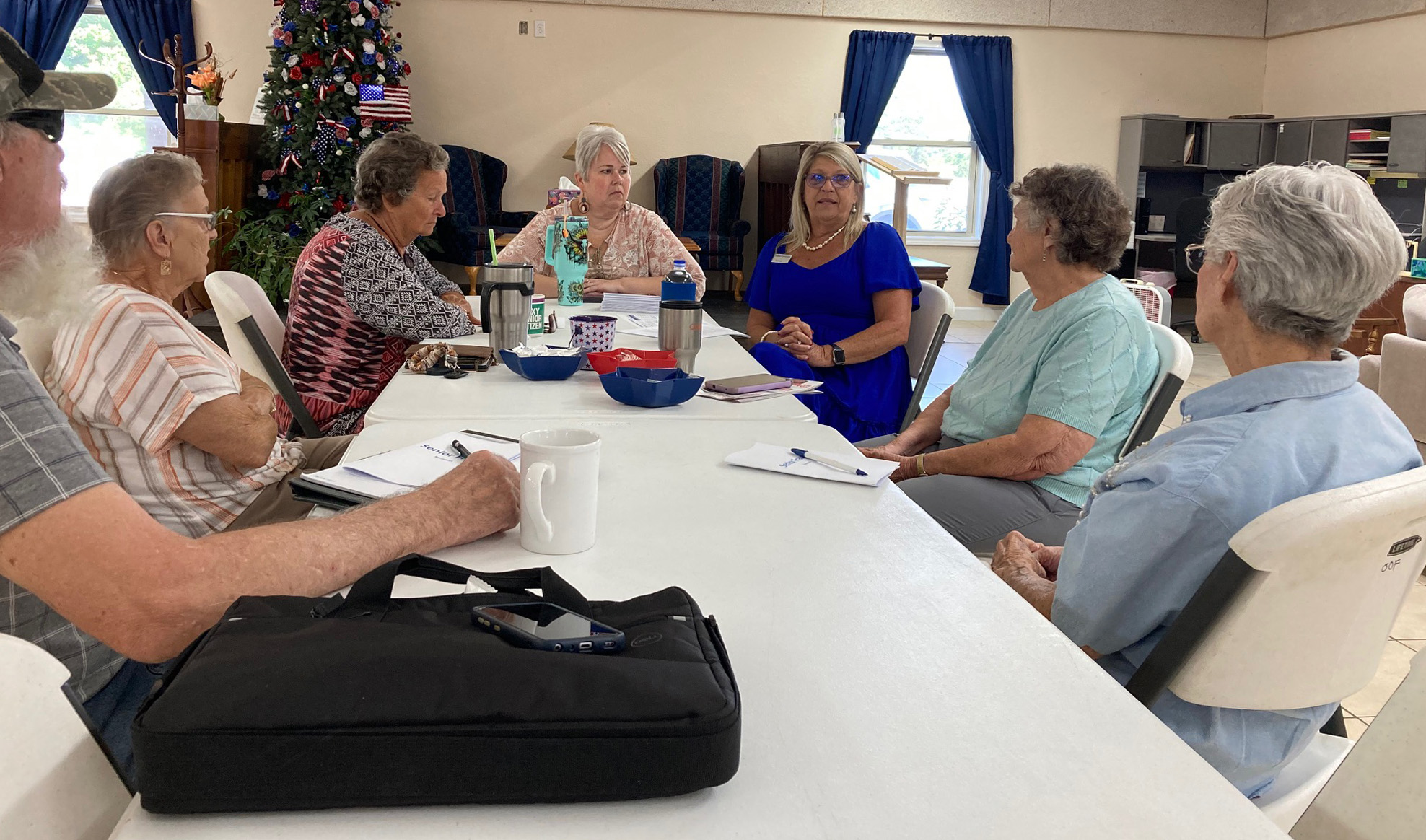
Last Wednesday, Tammy Williams and Ginger Frady with United Community Bank in Bryson City, were at Swain Senior Center conducting a program on senior fraud, offering tips on how to safeguard your finances and avoid being a target, whether it’s online by phone, text or mail.
The latest report from the Federal Trade Commission reveals older adults lost $1.6 billion to scammers last year, almost half of it to bogus investments.
Williams suggests using a credit card with a low limit for online purchases opposed to using a debit card.
One who attended the class said he had gotten text messages before asking for verification because there’s something wrong with his credit card. Williams warned messages like this are what is called “phishing,” where you are directed to a link online and asked to divulge personal information like your banking.
“Do not click on those links,” she said, adding if it does not specify which card it is referring to and is from that company it’s probably a scam.
Lottery scams are among common scams targeting seniors. Often, they will receive a check to deposit that will turn out to be a bad check, meanwhile they have been asked to provide upfront payment for fees and taxes.
The first question, Williams said, is to ask yourself if you even bought a ticket.
Often when these scams are made by phone, the person on the other end is very pushy about getting information and insist you need to send money urgently. They will often ask for payment through wire transfers or gift cards or ask for your personal banking information.
When receiving such phone calls, the best course of action is to hang up and do not provide any personal or financial information. “Another red flag is if you won something, but they want you to pay them money for it,” she said.
“Never be ashamed or afraid to come in and ask any of us, is this bad, okay? (Even if you don’t bank with us.)” Williams said of coming into the bank.
She shared a story about a man who was scammed and sent $10,000 in cash, but they were able to act quickly and track it down while it was in transit.
Most of the time, though, once someone sends cash or makes a wire transfer it makes it difficult if not impossible to track down and recover. The same is true with gift cards.
Other scams could include someone calling and claiming to represent a member of the government or to be from your banking institution or the power company. The first tip off that it’s a scam is such agencies don’t call people.
“We will never call you and start asking questions,” Williams said.
Another scam to be on alert for include online shopping scams, sometimes showing up as a link from a social media site. These sites are often poorly designed and unsecured. They sometimes are offering products like pharmaceuticals or beauty products that have no side effects and have secret formulas.
Williams says it’s easy see if another scam that targets seniors, the grandparent scam, is true or not. Often this is call from someone that might sound like a grandchild or relative who has gotten into some kind of trouble and asks you to send them money. They will often let the caller guess their name and then request funds be send via wire transfer.
Williams said you can always hang up and then call a relative directly yourself.
These kinds of scams tend to scare people and intimidate them into opening their wallets.
Frady warned to be careful too of caller id, because sometimes scammers will call through what appears as a local number.
“If they are really aggressive with you, that’s a sign that it is a scam,” she said.
Williams and Frady encouraged seniors to trust themselves.
“Stop and think about it, you know you paid your bill, and you didn’t buy a lottery ticket,” Williams said.
“I don’t want to see any of you get scammed or lose money,” she said.
The North Carolina Department of Justice has a no-scam hotline, and people can call 1-877-5-NO-SCAM to report scams. Another option is to dial 2-1-1 and United Way operators can direct callers to the appropriate place for assistance.
Learn more and download a guide at https://ncdoj.gov/protecting-consumers/senior-citizens/seniorscams/.
The North Carolina Senior Consumer Fraud Task Force has released a 23-minute fraud prevention video that is available online at the N.C. Secretary of State’s YouTube channel at bit.ly/NCSCAMJAM24 or on YouTube@AARPNC1.