
Larry Griffin
lgriffin@thesmokymountaintimes.com
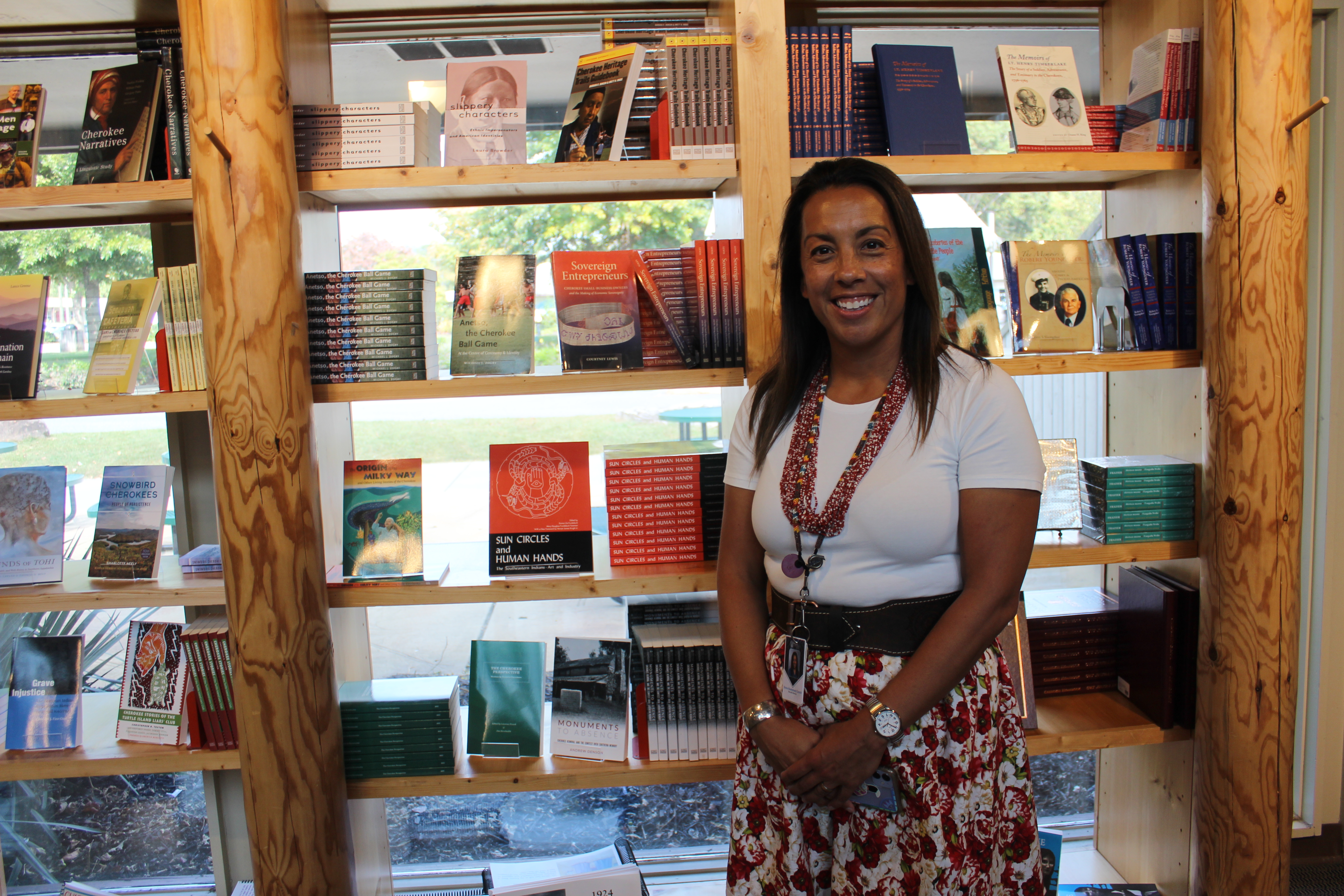
The Museum of the Cherokee Indian has long been a haven for tourists, with the museum proudly visible at the main junction right before tourists would drive to the Great Smoky Mountain National Park. But with its 75th anniversary this week, the museum has rebranded as the Museum of the Cherokee People, and executive director Shana Bushyhead Condill said she wants the museum to cater more to the locals.
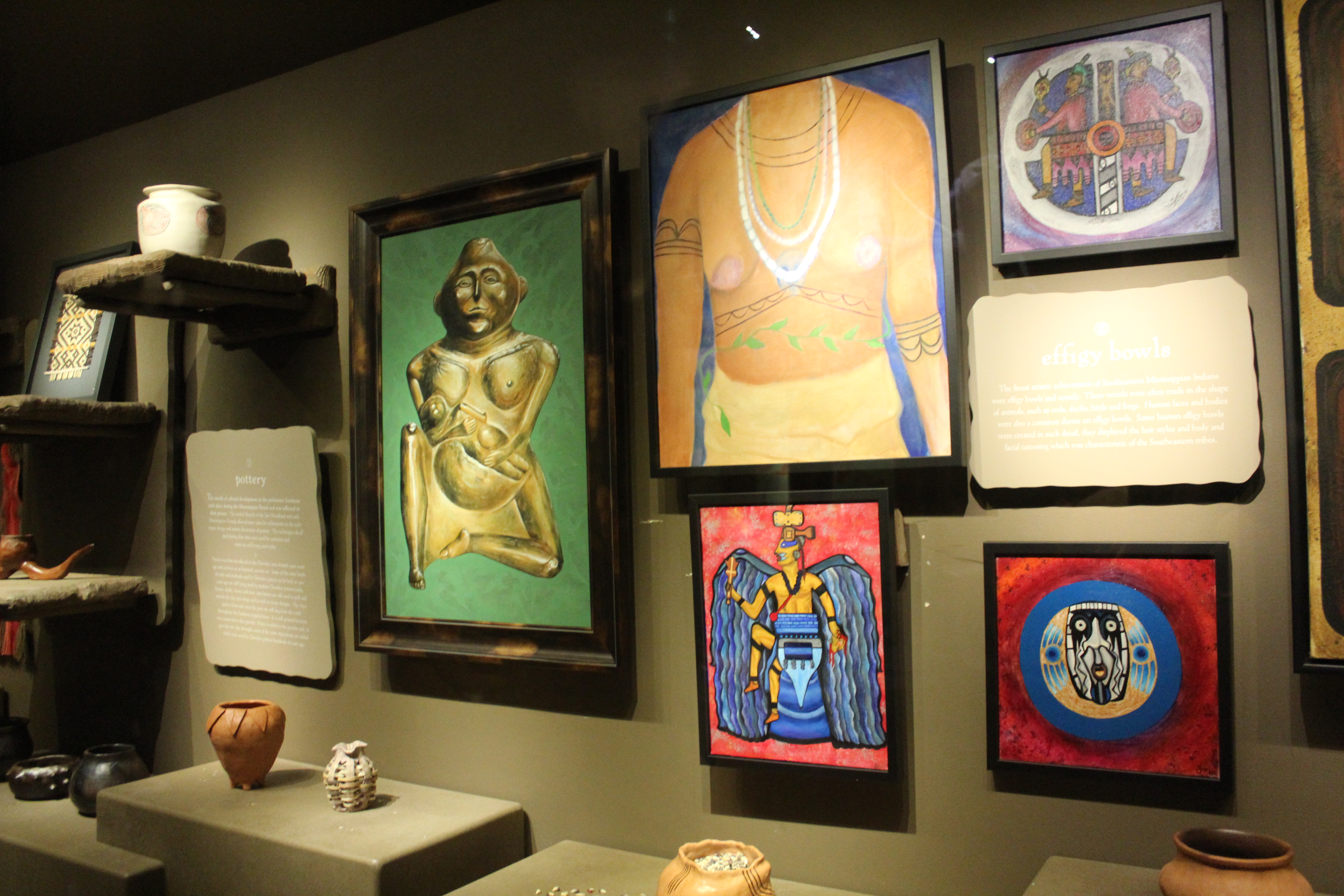
Part of that is its recent ‘Disruption’ exhibit, which does what it says on the tin – breaking up the usual historic exhibits with flashy modern art from living Cherokee artists, replacing funerary exhibits that were removed for reasons of respect to the dead.
All of it, Condill said, is meant to bring the museum more in orbit of the local population and living Cherokee residents today.
“We got super lucky that the entrance to the park was next to the Qualla boundary,” Condill said. “Three million visitors a year come through that park. The museum is a source of income for us, but we’ve been focused on the tourism angle. For us now, 2023 will be a shift to focus on our community.”
One part of that is the new color scheme of the museum, as it shifts away from the desert browns and tans in favor of color schemes more suited to the Smokies – more blues and greens which Condill said symbolize more of a pride in their homeland.
“We feel tied to this place,” she said. “It’s our ancestral homeland. We wanted the museum’s colors to reflect where we live. The mountains are beautiful.”
The museum will also be moving its collections to another site to add more space for programming. Some of that will include more educational classes for locals, including workshops for pottery, basket weaving and baby wearing, the last of which refers to the traditional Cherokee way of parents wearing their babies on their backs. Condill said they’re also promoting their event rooms more.
“This room is a good example,” she said, referring to the room she was being interviewed in. “It’s used all the time. I was surprised it was open today.”
She said it was especially important to reconnect with locals because many of them don’t currently come into the museum much at all. “If you ask some locals how many times they’ve been in the museum, most of them will say once or twice, for a field trip. Our goal is to serve the community, not just our tourists that come through.”
Condill began interning at the museum in her 20s. She spoke positively of the museum’s permanent exhibit, which chronicles the history of the Cherokee people, and which the museum is currently updating with the ‘Disruption’ material.
“It’s a very peaceful, immersive experience. That’s the feel you’ll get, going through the museum,” she said.
The museum is making other changes to try and center more on locals – to preserve sensitivity to customs, they’ve removed any exhibits showing funerary items or processes, and the ‘Disruption’ exhibit has filled the empty cases with local artwork from living Cherokee artists.
“Native people have been fighting against these types of objects being on display in museums for decades—that’s why the Native American Graves Protection and Repatriation Act (NAGPRA) was created,” said MCI Director of Education Dakota Brown (EBCI) in a press release.
Brown added that while NAGPRA, enacted in 1990, was “a step in the right direction” toward preserving respect for the funerary items, there was a standard the museum wanted to hold itself to now.
“As a tribal museum, we have even more of an obligation and responsibility to the objects, because we consider them ancestors, not just artifacts. The people who made these, who put their energy and creativity into those objects, used them, wore them—we’re being respectful of them,” Brown said, according to the press release.
At the Museum of the Cherokee People, one picture that used to depict native women practicing medicine has been replaced with a photo of close-up hands playing the game stick ball.
“There are things we want to keep private,” Condill said.
Condill thinks Native Americans are having something of a renaissance in the culture – with the TV show “Reservation Dogs” and the upcoming Martin Scorsese movie “Killers of the Flower Moon,” she thinks it’s important for them to have more involved stories in the culture.
“Authentic representation in media is really important,” she said. “We’re elated. Our story was told for us for a very long time.”