
Larry Griffin
lgriffin@thesmokymountaintimes.com
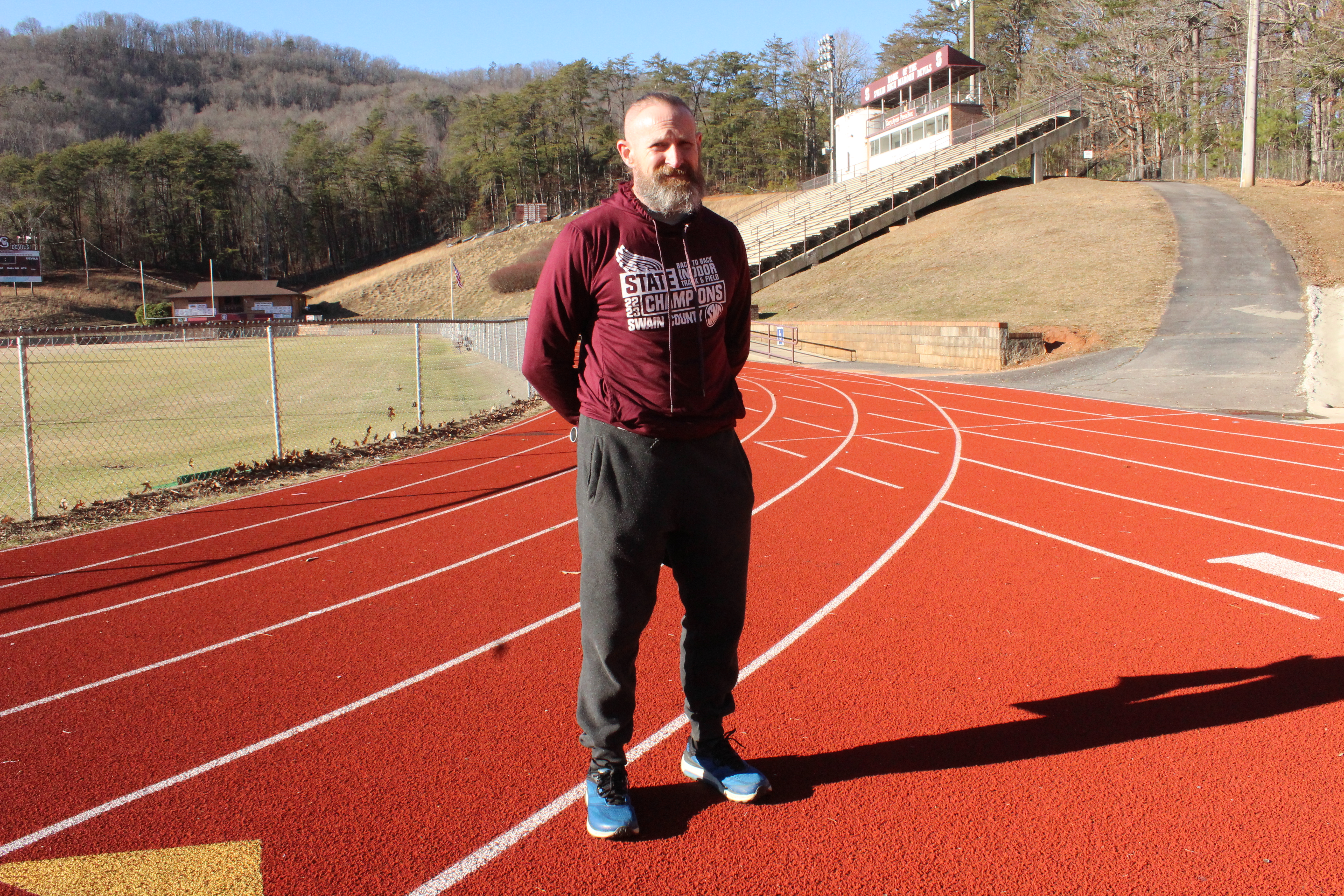
Coach Keith Payne didn’t let his recent award, crowning him as North Carolina Girls’ Cross Country Coach of the Year, go to his head.
“I did a track meet the next day after I got the award,” Payne said. “It feels more like a community award. The parents trust me, the kids trust me, there’s a whole community behind it.”
The award is administered by the US Track & Field and Cross Country Association, which selects one boys’ and one girls’ coach every year for every state in the country. Payne’s recognition makes sense, as the Lady Devils cross country team has been blazing past all its opponents for years now. Last fall, they won their third NCHSAA 1A State Championship in a row.
Payne has been coaching at various schools for over two decades now, starting in 1997. In the Western North Carolina region, he’s coached at Polk, then Andrews and then Murphy before finally accepting the job at Swain.
Payne said he’d chosen track and field and cross country as the sports to coach because he himself was a runner in school.
“It saved my life,” he said. “I wasn’t a great kid in school. I got in a lot of fights, I didn’t even know if I was going to graduate, but track changed my life. It put me on this path. I won a medal sophomore year in the 4x800, and right there, I said ‘I’m going to do this the rest of my life.’ It was about being given a medal for something I did. I’m just giving back to the sport that saved me. I became the first person in my family to go to college and to graduate college.”
He started teaching and coaching after graduating college but was still reluctant to gloat about successes even after winning the award.
“No one wants to talk about the years I wasn’t successful,” he said. “It was 15 years not winning a conference championship. I expected everyone to be like me – why don’t you run this fast? But I started to understand, these kids are volunteering their time. I can’t remember the last time I yelled at a kid. They’re doing hard work. They need me to support them, they don’t need me to come down hard.”
He marked 2013 as the time when he started doing better work, when he was coaching at Murphy.
“2013 was when things started going well. I started winning at my old school. I was getting close at Andrews, but we just didn’t have a lot of kids,” he said.
In his initial coming to Swain County High, he said he didn’t even intend to be a coach.
“I thought, I’m through coaching,” he said. “I was just out here watching my son play football. One day Coach Blankenship asked me ‘will you coach cross country? Mine just quit,’ and now I do it year-round.”
He said the process of becoming a good coach and getting the best performances out of his kids involved “going back and looking at what you need to do and what to do differently.” Ultimately he said he couldn’t take too much of the credit for his team’s successes over the past decade, either.
“The kids bought in,” he said. “Without the kids, we don’t have anything. The kids put the work in.”
He gestured to the day around him, which was cold and windy. Despite that, a handful of athletes were practicing the high jump, and there was another gym class going on across the field at Swain Memorial Stadium.
“We’re out here in 30-degree weather, look at all these kids out here. They know they can be successful. They come out and try to be successful – they buy in, and the kids can find success and keep building. Every day you see yourself get a little better, you set a personal record…”
Payne said he keeps in touch with many students after they’ve graduated, including writing college recommendation letters for them.
“I’ve sent seven letters of recommendation this year alone,” he said. “I can’t even count how many I’ve done as a whole. I make a junior my captain so they can put that on their college applications. I help ‘em through college – they send me a paper and say, can you look at that?”
As he spoke, Payne briefly took breaks to coach the kids. He instructed them on how best to jump, and when some other students passed by practicing jogging, he shouted some quick instructions to them, too. He described the culture as community-focused.
“We take care of each other,” he said, and pointed to one student practicing the high jump as he spoke. “The brunette doing the high jump, she’s wearing my sweater. She didn’t have one.”
Ultimately Payne was happy about the award, but really just wanted to get back to steering his team onto more wins.
“I love coaching,” Payne said. “It keeps me in education. I can’t imagine not coaching.”