
Jessica Webb
editor@thesmokymountaintimes.com
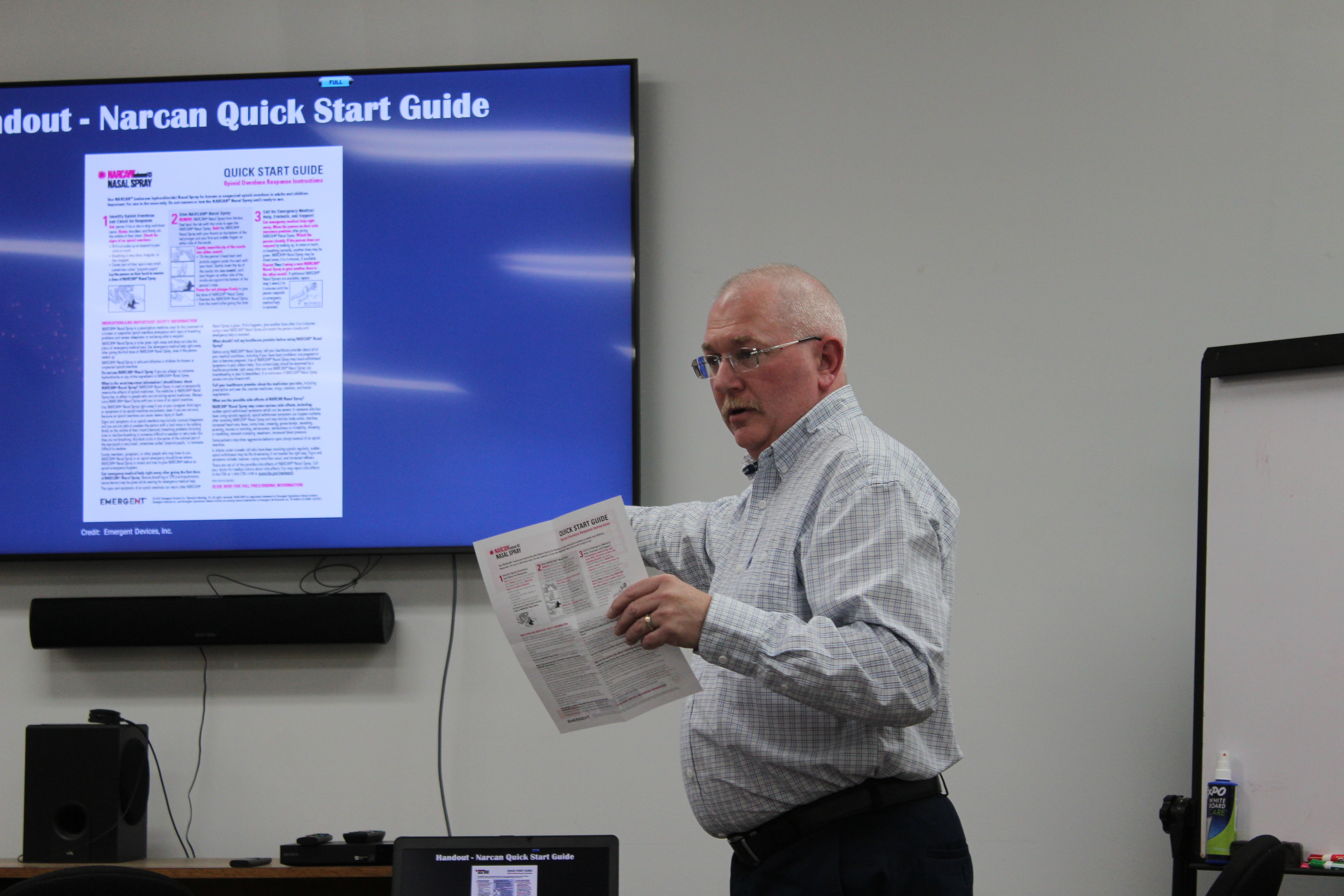
Mark Pilon, preventionist with Mountain Projects, gave a presentation on opioid overdose prevention on Thursday afternoon, Nov. 16, at Marianna Black Library. It was a lesson in what opioids are, how to identify overdoses and how to use Naloxone to reverse them. He also provided free Narcan kits and lock boxes to those in attendance, which can also be found at Swain County Health Department and Restoration House for free.
So, what is an opioid?
“They can be both natural and synthetic,” Pilon explained. The natural drug comes from the poppy plant. The drug is used in the medical field to treat pain. It is also found illicitly and comes in many forms, from a powder to a liquid or compressed in pills.
Pilon described how opioids attach to the opioid receptors in people’s brains, when they form a bond, effects include slowed breathing.
“It acts a depressant, and if someone takes enough (too much) they generally stop breathing,” Pilon said.
Naloxone, which can be found now in a nasal spray from available over the counter with name brand Nacan, acts to reverse an opioid overdose.
“The naloxone knocks the opioids off the receptors,” Pilon said, adding it has a stronger affinity with the receptors.
Overdoses can happen from any form of opioid when someone ingests more than their body has a tolerance for.
Some examples of this would be someone who has detoxed while they were incarcerated and then when they are released, takes the same dosage they were used to and it’s too much for them.
Other factors that can lead to an overdose include mixing opioids with other drugs, such as alcohol, which also acts as a depressant. Mixing it with anti-anxiety medications, or Benzodiazepine, can increase the risk of fatal overdoses.
Another danger that is being seen more on the streets is Xylazine, a horse tranquilizer.
“One problem we see with that is a person’s depression of the respiratory system but Narcan doesn’t work on that Xylazine,” Pilon warned.
When it comes to prevention, a few key take aways are:
• Take medications as they are prescribed
• Never mix opioids with alcohol or other illicit substance and
• Store them properly away from children and pets.
Recognizing an
opioid overdose
When someone has an opioid overdose, it often appears they have nodded off or fallen asleep. Some signs include: a gurgling snore, breathing is very slow/shallow, pulse is slow, and the person has lost consciousness and is unresponsive. Other signs could include small, constricted “pinpoint” pupils and bluish fingernails.
The first step, Pilon said, is to call 911 immediately. Then, you can do CPR and administer Naloxone.
Administering Narcan
After identifying a suspected overdose and the person is not responsive, lay the person on their back. Then, insert the tip of the nasal spray into one nostril and push the plunger down to administer it. Thirdly, lay that person on their side with their hands under their head and their top knee over their body— this is to prevent risks if they vomit.
It takes about 2-3 minutes for the Naloxone to work. If that time has passed, and the person still hasn’t responded, you can administer an additional dose.
“Everybody is different how they react,” Pilon said. “It is very effective if enough Nalaxone has been administered to counteract that opioid.”
Once it has worked, the person will show signs of awareness, “coming back to,” Pilon said.